

Crawl Space Encapsulation in Los Angeles, CA
Professional Crawl Space Encapsulation in Los Angeles, CA in Los Angeles, CA — Licensed, Insured & Locally Owned
Get professional crawl space encapsulation in Los Angeles, CA. Air Tight Insulation protects your home from moisture & mold. Free estimate—call 323-618-6376.
- Licensed & Insured
- Locally Owned & Operated
- Free Inspection & Estimate
Request Your
Free EstimateCrawl space encapsulation is a comprehensive moisture control and air sealing process that transforms an open, vented crawl space into a clean, conditioned environment by installing a heavy-duty vapor barrier across the floor and walls, sealing vents, and controlling humidity levels. In Los Angeles, where marine layer moisture rolls in from the Pacific Ocean, clay-heavy soils trap ground moisture beneath homes, and temperature swings between the coast and inland valleys create condensation challenges, a properly encapsulated crawl space is essential to protecting your home’s structural integrity and indoor air quality.
At Air Tight Insulation, our team of professional insulation contractors brings deep local knowledge of Los Angeles construction types—from 1920s Craftsman bungalows in Highland Park to mid-century ranch homes in the San Fernando Valley—to deliver crawl space encapsulation solutions built for Southern California’s unique environment. Call us today at 323-618-6376 to schedule your free crawl space assessment.
Understanding Crawl Space Encapsulation
A crawl space is the shallow, unfinished area beneath a home that provides access to plumbing, electrical systems, and structural components. Traditionally, building codes required crawl spaces to be vented to the outside to allow moisture to escape—a standard that dominated construction practices from the early 1900s through the 1980s. However, decades of building science research have demonstrated that vented crawl spaces actually introduce more moisture problems than they solve, particularly in climates like Los Angeles where outdoor humidity, soil gases, and marine air infiltrate freely through open foundation vents.
Crawl space encapsulation evolved from this research as a superior alternative. The process involves sealing the crawl space from the outside environment by installing a reinforced polyethylene vapor barrier—typically 12 to 20 mils thick—across the dirt floor and up the foundation walls, closing or blocking existing foundation vents, sealing all penetrations, and installing a dehumidifier or conditioning system to maintain controlled humidity levels below 60 percent relative humidity. This transforms the crawl space from an unconditioned buffer zone into a semi-conditioned space that behaves more like a basement.
In Los Angeles, encapsulation is particularly relevant because the vast majority of the housing stock—estimated at over 60 percent of single-family homes—sits on raised foundations with crawl spaces rather than on slabs. This is especially true in neighborhoods developed before 1960, including Silver Lake, Echo Park, Pasadena, Glendale, Burbank, and the older sections of the San Fernando Valley. The raised foundation style was favored in Southern California because of the region’s varied topography, the need for ventilation in the era before air conditioning, and the prevalence of expansive adobe and clay soils that made slab foundations challenging in many areas.
Understanding the difference between crawl space encapsulation and basic crawl space insulation is important. crawl space insulation addresses thermal performance by adding insulation to the floor joists above the crawl space, while encapsulation addresses moisture control at the foundation level. The two services are often performed together for maximum energy efficiency and structural protection. Air Tight Insulation offers both as part of a comprehensive crawl space health program tailored to Los Angeles homes.
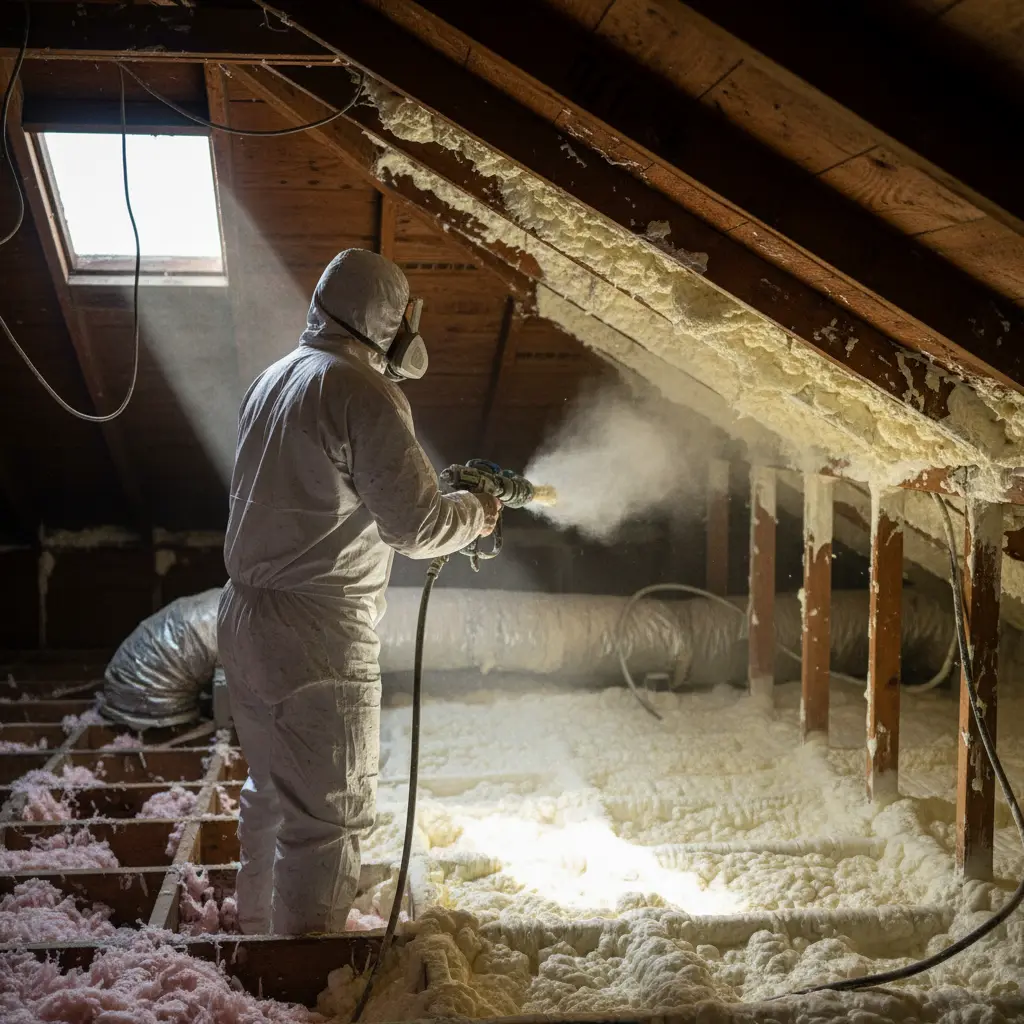
Our team in action — insulation professionals serving Los Angeles
Why Crawl Space Encapsulation Is Needed in Los Angeles, CA
Marine Layer Moisture and Coastal Humidity
The marine layer—a low-lying stratum of cool, moist Pacific Ocean air—regularly blankets coastal and near-coastal Los Angeles communities from roughly May through September, a phenomenon locals call “June Gloom.” In neighborhoods like Santa Monica, Venice, Culver City, Mar Vista, and Westchester, morning relative humidity frequently exceeds 85 to 90 percent during these months. This moisture penetrates open foundation vents, condenses on cold soil and wood framing, and creates the persistently damp conditions that accelerate wood rot and mold growth. Even in drier inland communities like Chatsworth or Northridge, overnight condensation regularly introduces measurable moisture into unencapsulated crawl spaces.
Expansive Clay and Adobe Soils
The Los Angeles Basin and surrounding hillsides contain significant deposits of expansive clay soils—including Montmorillonite clay found extensively in the Santa Monica Mountains foothills and across the San Gabriel Valley—that absorb water and swell during the wet season before shrinking and cracking in the dry season. This annual swell-shrink cycle, which can move soil volumes by 10 to 15 percent, keeps ground moisture levels in constant flux directly beneath crawl space floors. The California Department of Conservation has documented widespread expansive soil zones throughout the city, including in neighborhoods like Glassell Park, Mount Washington, and El Sereno. Without a proper vapor barrier, this moisture migrates freely upward into the crawl space environment.
El Niño Rain Events and Atmospheric Rivers
El Niño cycles bring above-average precipitation to Southern California, and atmospheric river events—colloquially called “Pineapple Express” storms—can deliver several inches of rainfall in a 24-hour period. The January 2023 atmospheric river series dropped over 10 inches of rain on parts of Los Angeles County within two weeks, the wettest stretch in nearly a decade. During such events, groundwater tables rise, surface runoff saturates soil adjacent to foundations, and even homes with good exterior drainage see significant moisture infiltration in crawl spaces. Without encapsulation, these episodic flooding events leave crawl spaces damp for weeks, allowing mold colonies to establish on wood framing joists.
Seismic Activity and Foundation Stress
Los Angeles sits at the intersection of multiple active fault systems, including the Newport-Inglewood Fault, the Hollywood Fault, and segments of the San Andreas Fault system. Seismic events—such as the 1994 Northridge earthquake that registered 6.7 magnitude—can cause micro-cracking in stem walls and foundation concrete, creating new pathways for soil moisture to enter crawl spaces. Homes in seismically vulnerable zones like the Sylmar area, Reseda, and Canoga Park benefit from encapsulation that includes foundation wall coverage, which also helps identify new cracks that develop over time.
Older Housing Stock and Degraded Original Vapor Barriers
A significant percentage of Los Angeles homes were built between 1920 and 1970, when vapor barriers either did not exist or consisted of thin 4-mil polyethylene sheeting that has since degraded, torn, or shifted. Many of these original barriers in neighborhoods like Los Feliz, Hancock Park, and Leimert Park offer virtually no moisture protection today. Upgrading to modern 20-mil reinforced barriers as part of a full encapsulation system restores the protection these homes lost decades ago.
Signs You Need Crawl Space Encapsulation in Los Angeles
Moisture and Water Indicators
- Visible standing water or damp soil in the crawl space after rain events
- Efflorescence (white mineral deposits) on foundation walls indicating water migration
- Condensation on pipes, ducts, or the underside of floor sheathing
- Musty, earthy odors rising into living spaces—particularly noticeable in wood-floored rooms
Structural Warning Signs
- Soft, spongy, or sagging floors that flex underfoot—a potential indicator of wood rot in floor joists
- Visible darkening, staining, or fuzzy growth on wood framing members visible from the crawl space access hatch
- Rusting fasteners, metal bridging, or HVAC duct hangers in the crawl space
Indoor Air Quality and Energy Symptoms
- Increased allergy or respiratory symptoms in household occupants, potentially linked to mold spore infiltration
- Noticeably cold floors in winter months, especially in older homes in neighborhoods like Boyle Heights or Highland Park
- Unexpectedly high energy bills suggesting conditioned air is escaping through the floor system
- Evidence of pest activity—rodent droppings, insect frass, or damaged insulation—as pests prefer moist crawl spaces
Urgency note: If you observe active mold growth, structural wood damage, or standing water, contact Air Tight Insulation at 323-618-6376 immediately. These conditions worsen rapidly and may indicate the need for remediation before encapsulation can proceed.
Crawl Space Encapsulation Methods and Approaches
Full Encapsulation with Closed-Cell Spray Foam Wall Insulation
This premium approach pairs the vapor barrier floor installation with closed-cell spray foam insulation applied to the inside surfaces of the foundation walls at a thickness of 2 to 3 inches, delivering R-13 to R-20 thermal performance while creating an additional air and moisture barrier. This method is ideal for Los Angeles hillside homes in neighborhoods like Beachwood Canyon, Mount Olympus, or Laurel Canyon where foundation walls are exposed to significant soil moisture contact and temperature differentials are pronounced.
Standard Encapsulation with Dehumidifier
The most common approach for Los Angeles homes, this method uses a 20-mil vapor barrier on the floor and walls combined with a high-capacity crawl space dehumidifier—typically rated at 70 to 90 pints per day—to maintain relative humidity at or below 55 percent year-round. This is the preferred solution for homes in coastal communities like Playa del Rey, El Segundo, and Marina del Rey where marine layer humidity is a persistent seasonal challenge.
Encapsulation with Conditioned Air Supply
For homes with centrally ducted HVAC systems, a small supply air register can be introduced into the encapsulated crawl space, conditioning the space through the home’s existing system without a standalone dehumidifier. This approach works well in newer construction in the San Fernando Valley where HVAC systems are sized to accommodate the additional space load.
Partial Encapsulation for Budget-Focused Solutions
In cases where full encapsulation is not immediately feasible, we install a high-quality vapor barrier on the crawl space floor with sealed overlaps and wall coverage without full vent sealing. This addresses the primary moisture source—ground evaporation—and serves as a first phase that can be upgraded to full encapsulation in the future.
Ready for Crawl Space Encapsulation? Get Your Free Estimate Today.
Air Tight Insulation serves Los Angeles and the surrounding area — we’ll be on-site within 24 hours.
📞 Call 323-618-6376Crawl Space Encapsulation Cost in Los Angeles, CA
Understanding the cost of crawl space encapsulation in Los Angeles helps homeowners plan and evaluate proposals accurately. Pricing varies based on crawl space size, accessibility, moisture severity, and the specific methods employed.
Typical Price Ranges
- Basic vapor barrier installation only (under 1,000 sq ft): $1,500 to $3,000
- Standard full encapsulation with dehumidifier (1,000 to 2,000 sq ft): $4,500 to $8,000
- Premium encapsulation with spray foam walls and dehumidifier (2,000+ sq ft): $8,000 to $15,000
- Add-on dehumidifier unit only: $800 to $1,800 depending on capacity
- Rodent proofing and debris removal add-on: $500 to $1,500
Factors That Affect Your Los Angeles Crawl Space Encapsulation Cost
- Crawl space height and accessibility: Los Angeles bungalows and older Craftsman homes often have very low crawl spaces—sometimes 18 to 24 inches—that require additional labor time and specialized equipment.
- Existing moisture damage: Homes that have experienced flooding during El Niño events may require mold remediation or structural wood repair before encapsulation can proceed, adding $500 to $3,000 to the project.
- Hillside vs. flat lot construction: Hillside properties in areas like Silver Lake or Glassell Park often have irregular, multi-level crawl spaces that require more materials and installation time.
- Current vapor barrier condition: Homes with heavily contaminated or adhered old barriers require more preparation labor.
Call Air Tight Insulation at 323-618-6376 for a free, no-obligation on-site estimate tailored to your specific crawl space and location. We provide itemized written proposals so you understand exactly what you are paying for.
Los Angeles Neighborhoods We Serve
Silver Lake and Echo Park
These historic hillside neighborhoods are densely populated with 1920s through 1940s Craftsman bungalows and Spanish Colonial Revival homes, almost all built on raised foundations. Sloped lots create multi-level, irregular crawl spaces with significant clay soil moisture exposure. We regularly encapsulate homes here that have had inadequate or no vapor barriers since original construction.
San Fernando Valley (Northridge, Reseda, Canoga Park)
The Valley’s post-war housing boom produced thousands of 1950s and 1960s ranch-style homes on raised foundations. These crawl spaces tend to be more accessible than hillside homes but face intense summer heat cycling and residual soil disturbance from the 1994 Northridge earthquake that created foundation micro-cracks still causing moisture infiltration today.
Pasadena and Altadena
Home to some of Los Angeles County’s oldest housing stock, Pasadena and Altadena feature historic properties dating to the 1890s through 1920s with crawl spaces that have never received modern moisture protection. The proximity to the San Gabriel Mountains creates unique freeze-thaw dynamics that stress older foundation walls and increase moisture infiltration risk.
Culver City and Mar Vista
These coastal-adjacent communities face persistent marine layer moisture challenges from May through October. Mid-century homes here are particularly susceptible to under-floor mold growth due to chronically elevated humidity levels that routinely exceed 80 percent in unencapsulated crawl spaces.
We also serve all surrounding communities throughout the greater Los Angeles area. Contact us to confirm service availability in your specific neighborhood.
Crawl Space Encapsulation Maintenance Tips for Los Angeles Homeowners
- Inspect your crawl space annually before the rainy season (October): Check for vapor barrier damage, water intrusion, or new pest activity before El Niño or atmospheric river events arrive.
- Monitor your dehumidifier monthly: Empty the collection reservoir if not drained automatically, and check that the unit is cycling properly. Los Angeles marine layer season (May through September) will cause the unit to run more frequently.
- Check foundation vent covers after earthquakes: Even minor seismic events can dislodge foam vent covers. Re-secure any that have shifted to maintain the sealed environment.
- Maintain proper exterior drainage: Ensure downspouts extend at least 6 feet from the foundation and that soil grades away from the house—critical during the December through March wet season in Los Angeles.
- Inspect for rodent activity after the encapsulation warranty period: Roof rats are persistent in Los Angeles and may find new entry points. Check for gnaw marks or droppings at the crawl space access hatch annually.
- Replace the dehumidifier filter every 3 to 6 months: Los Angeles air contains significant particulates, especially during wildfire smoke events, which can reduce filter lifespan.
- Re-inspect barrier seams every 3 to 5 years: Seismic activity and soil movement specific to the Los Angeles Basin can stress barrier seam tape over time. Air Tight Insulation offers maintenance inspection services to keep your encapsulation performing optimally.
Why Choose Air Tight Insulation for Crawl Space Encapsulation in Los Angeles
At Air Tight Insulation, we are a professional insulation contractor deeply rooted in the Los Angeles community. Our technicians understand the specific moisture challenges, soil types, building eras, and architectural styles found throughout the city—from the historic Craftsman neighborhoods of the Eastside to the sprawling ranch homes of the San Fernando Valley and the oceanfront properties of the Westside.
We offer the full spectrum of related services under one roof, meaning your crawl space project does not require coordinating between multiple contractors. Our team handles crawl space insulation, insulation removal, rodent proofing, spray foam insulation, and blown-in insulation as part of a unified scope of work. This integrated approach ensures that every component of your crawl space system is correctly installed and compatible with the others.
We provide free, detailed on-site estimates, transparent itemized pricing, and thorough photographic documentation before and after every project. Our goal is to give every Los Angeles homeowner the information they need to make confident decisions about protecting their home.
Call us today at 323-618-6376 to schedule your free crawl space assessment and get a personalized recommendation for your property.
Frequently Asked Questions About Crawl Space Encapsulation in Los Angeles
How much does crawl space encapsulation cost in Los Angeles?
In Los Angeles, a standard full crawl space encapsulation project typically ranges from $4,500 to $8,000 for homes between 1,000 and 2,000 square feet. Hillside properties with irregular or low-clearance crawl spaces, or homes requiring mold remediation and debris removal, may see costs ranging from $8,000 to $15,000 or more. We provide free on-site estimates so you receive accurate pricing for your specific home. Call 323-618-6376 to schedule yours.
How long does crawl space encapsulation take in Los Angeles?
Most standard crawl space encapsulation projects in Los Angeles are completed in 2 to 4 days. Larger homes, hillside properties with complex multi-level crawl spaces, or projects requiring mold remediation or significant debris removal may take 4 to 7 days. We provide a project timeline in writing before work begins.
Is crawl space encapsulation worth it for Los Angeles homes?
Yes. Given Los Angeles’s marine layer humidity, clay soil moisture, and episodic heavy rainfall from El Niño events and atmospheric rivers, crawl space encapsulation delivers measurable benefits: reduced mold risk, improved indoor air quality, lower energy bills through reduced heat loss through the floor, extended lifespan of structural wood members and HVAC ductwork, and improved home resale value. Many Los Angeles real estate agents now recommend encapsulation as a pre-listing improvement.
Do I need a permit for crawl space encapsulation in Los Angeles?
In most cases, vapor barrier installation and vent sealing do not require a permit from the City of Los Angeles Department of Building and Safety. However, if the project involves HVAC modifications—such as adding a conditioned air supply register to the crawl space—a permit may be required. Air Tight Insulation will advise you on permit requirements specific to your project and jurisdiction during the initial assessment.
How does Los Angeles’s marine layer affect my crawl space?
The marine layer delivers cool, moisture-laden Pacific Ocean air that regularly pushes relative humidity above 85 to 90 percent in coastal and near-coastal neighborhoods from May through September. This moisture infiltrates through open foundation vents, condenses on cold wood and soil surfaces, and elevates crawl space humidity to levels that promote mold growth—typically above 70 percent relative humidity. Encapsulation with a dehumidifier prevents this seasonal moisture loading from damaging your home’s structure.
Can crawl space encapsulation help with rodent problems in Los Angeles?
Yes. Rodents—particularly roof rats, which are prevalent throughout Los Angeles—prefer moist, undisturbed environments like unencapsulated crawl spaces. As part of our encapsulation process, we include rodent proofing by sealing foundation vents, pipe penetrations, and stem wall gaps with hardware cloth and caulk. This exclusion work combined with a properly maintained encapsulated environment significantly reduces crawl space rodent activity.
What type of vapor barrier is used for crawl space encapsulation in Los Angeles?
We install reinforced 20-mil polyethylene vapor barriers, which are the highest grade available for residential crawl space encapsulation. This thickness is significantly more durable than the 4-mil or 6-mil polyethylene sheeting used in older Los Angeles homes, and it resists puncture from the gravel, adobe clay clods, and debris commonly found on Los Angeles crawl space floors. Seams are overlapped a minimum of 12 inches and sealed with purpose-rated tape.
How does crawl space encapsulation interact with my home’s attic insulation?
Crawl space encapsulation and attic insulation address opposite ends of the building envelope—the floor system and the roof/ceiling assembly respectively. Both are important for whole-home energy efficiency. Many Los Angeles homeowners address both in a single project to maximize Title 24 energy code compliance and achieve the greatest reduction in heating and cooling costs. Air Tight Insulation can assess and address both your crawl space and attic in a coordinated project.
Get Your Free Crawl Space Encapsulation Estimate in Los Angeles Today
Protecting your Los Angeles home from moisture damage, mold, and energy loss starts with a professional crawl space assessment. Whether you are dealing with musty odors, cold floors, elevated energy bills, or visible moisture in your crawl space, the team at Air Tight Insulation is ready to help. We serve homeowners throughout Los Angeles—from the Westside to the San Fernando Valley, from Pasadena to the South Bay.
Call us now at 323-618-6376 to schedule your free, no-obligation on-site crawl space evaluation. Our technicians will inspect your crawl space, document existing conditions, and provide you with a detailed written proposal so you can make a fully informed decision about protecting your home.
Do not wait for the next El Niño season or marine layer summer to find out your crawl space is damaged. Contact Air Tight Insulation today—Los Angeles’s professional choice for crawl space encapsulation.