

Crawl Space Insulation in Los Angeles, CA
Energy-Saving Crawl Space Insulation in Los Angeles, CA for Los Angeles, CA Homes — Licensed & Insured
Need crawl space insulation in Los Angeles, CA? Air Tight Insulation offers expert installation, vapor barriers & encapsulation. Call 323-618-6376 for a free estimate.
- Licensed & Insured
- Locally Owned & Operated
- Free Inspection & Estimate
Request Your
Free EstimateCrawl space insulation is the process of thermally sealing and protecting the underfloor cavity beneath your home, preventing heat transfer, moisture intrusion, and pest infiltration between the ground and your living spaces. In Los Angeles, where homes sit atop expansive clay soils, experience dramatic seasonal temperature swings from the Pacific marine layer, and face persistent moisture challenges from the region’s unique microclimates, a properly insulated crawl space is not a luxury — it is a structural and comfort necessity.
At Air Tight Insulation, we specialize in professional crawl space insulation solutions tailored to the specific demands of Los Angeles homes. Whether you own a post-war bungalow in Eagle Rock, a hillside property in Silver Lake, or a ranch-style home in the San Fernando Valley, our team delivers expert installation designed to lower your energy bills, improve indoor air quality, and protect your home’s structural integrity for years to come. Call us today at 323-618-6376 for a free assessment.
Understanding Crawl Space Insulation
A crawl space is the shallow, unfinished area beneath a home’s floor structure, typically ranging from 18 inches to 4 feet in height. Unlike a full basement, a crawl space is not designed for occupancy — it exists to elevate the home above ground level, provide access to plumbing and electrical systems, and create a buffer between the earth and the living area above. Without proper insulation, this space becomes a conduit for energy loss, moisture damage, and biological hazards.
Crawl space insulation has evolved significantly over the past several decades. In the early twentieth century, most California builders constructed homes with ventilated crawl spaces, relying on cross-ventilation to manage moisture. This approach, once standard practice under older building codes, is now understood to be problematic in many climates, particularly in areas with ground-level moisture and vapor transmission like much of the Los Angeles Basin.
Modern crawl space insulation strategies fall into two primary categories: vented crawl spaces, where insulation is installed between the floor joists above, and encapsulated crawl spaces, where the entire space is sealed with a vapor barrier and insulation is applied to the foundation walls. The encapsulation approach has become the preferred method in high-performance construction and energy efficiency retrofits across California.
Los Angeles has a uniquely diverse housing stock. The region contains more than 1.4 million single-family homes, a large portion of which were constructed between the 1920s and the 1970s — an era predating modern insulation standards under Title 24 of the California Building Code. Craftsman bungalows in Highland Park, mid-century ranch homes in Reseda, and Spanish Colonial revivals in Los Feliz are all prime candidates for crawl space insulation upgrades. Many of these homes were built on raised foundations with uninsulated or under-insulated crawl spaces that have never been addressed, leaving homeowners with cold floors, elevated energy costs, and potential moisture-related structural damage.
Understanding the nature of your crawl space — its dimensions, ventilation design, existing moisture levels, and access points — is the critical first step before any insulation work begins. Learn about our attic insulation services to see how a whole-home approach to thermal performance can maximize your energy savings.
Why Crawl Space Insulation Is Needed in Los Angeles
Expansive Clay Soils and Moisture Migration
The Los Angeles Basin sits predominantly on Expansive Vertisol and Mollisol clay soils, particularly in neighborhoods such as Boyle Heights, South Central, and the western portions of the San Fernando Valley. These soils absorb and retain moisture during the rainy season — typically November through March — and then shrink and crack during the dry summer months. This seasonal expansion and contraction creates ground-level vapor that migrates upward into uninsulated crawl spaces, elevating relative humidity levels to 70% or higher beneath the floor structure. At these moisture levels, wood rot, mold colonization, and pest infestation become active threats to your home’s structural floor joists and subfloor sheathing.
Pacific Marine Layer and Temperature Swings
The marine layer off Santa Monica Bay pushes inland most mornings from May through September, a phenomenon locals call “June Gloom.” This persistent low cloud cover drops nighttime temperatures in coastal-adjacent neighborhoods like Culver City, Mar Vista, and Mid-City into the mid-50s°F, even when daytime highs reach the mid-80s°F. This 25–30°F daily temperature delta creates condensation cycling beneath homes with uninsulated crawl spaces, depositing moisture on cold surfaces and accelerating wood degradation. Homes more than five miles inland, such as those in North Hollywood or El Sereno, experience even more extreme swings, with summer highs exceeding 100°F in the San Fernando Valley creating radiant heat transfer through uninsulated subfloors.
Post-Earthquake Structural Vulnerabilities
The January 17, 1994 Northridge Earthquake (6.7 magnitude) caused widespread damage to raised-foundation homes throughout the region, including significant disruption to crawl space vapor barriers, existing fiberglass batts, and foundation cripple walls. Many homes repaired after this event received structural retrofitting but no crawl space insulation upgrade. Similarly, the 1987 Whittier Narrows Earthquake caused foundation shifts in the eastern San Gabriel Valley that altered crawl space drainage patterns. Homes in Northridge, Chatsworth, Reseda, and Sylmar that were affected by these events may have compromised crawl space conditions that have deteriorated further over the subsequent decades.
Urban Wildlife and Pest Pressure
Los Angeles is home to one of the highest urban rodent populations of any major American city. The Los Angeles County Department of Public Health has documented persistent rat activity — particularly roof rats (Rattus rattus) and Norway rats — in neighborhoods from Silverlake to Watts. Rats, mice, and opossums routinely nest in uninsulated or poorly insulated crawl spaces, using degraded fiberglass batts as nesting material and creating pathways for cold drafts, moisture, and contamination into the living area. Explore our rodent proofing services to understand how we address pest infiltration as part of a comprehensive crawl space solution.
Title 24 Energy Code Compliance
California’s Title 24 Building Energy Efficiency Standards require that crawl space floor assemblies in Climate Zone 9 (central Los Angeles) meet a minimum R-19 insulation value. Many older Los Angeles homes fall well below this threshold or have no crawl space insulation at all, meaning they are operating outside current code requirements and paying significantly more in heating and cooling costs than necessary.
Signs You Need Crawl Space Insulation
Temperature and Comfort Symptoms
- Floors that feel noticeably cold in the morning, even during mild Los Angeles winters
- Uneven room temperatures between ground-floor and upper-floor rooms
- HVAC system running longer cycles than normal to maintain set temperature
- Drafts near baseboards or floor-level registers
Moisture and Structural Indicators
- Musty or earthy odors rising from floor vents or near the perimeter of ground-floor rooms
- Visible condensation on interior windows during cool mornings
- Soft, spongy, or visibly discolored subfloor sections when accessed from below
- Rust staining on HVAC ductwork visible in the crawl space
- Standing water or dried mineral deposits (efflorescence) on the crawl space floor after rainfall
Biological and Pest Warning Signs
- Evidence of rodent droppings, nesting material, or gnaw marks in the crawl space
- Visible mold or mildew on floor joists, subfloor, or existing insulation
- Damaged, torn, or missing vapor barrier sections
- Displaced or sagging insulation batts hanging below the floor joists
Energy Bill Indicators
- Monthly gas or electric bills exceeding typical Los Angeles averages for your home size (approximately $0.25–$0.30 per kWh for SCE residential customers)
- Significant increase in utility costs following a wet winter season
Our Crawl Space Insulation Process
At Air Tight Insulation, we follow a systematic, multi-step process that addresses the full scope of crawl space conditions unique to Los Angeles homes. We do not take shortcuts, and we do not begin insulation installation until we fully understand what your crawl space requires.
Free On-Site Assessment (1–2 Hours)
Our technician performs a thorough inspection of your crawl space, documenting dimensions, access points, existing insulation condition, moisture readings (using a calibrated hygrometer), ventilation type, pest activity, and any structural concerns. We photograph all findings and share them with you before recommending a scope of work.
Insulation Removal and Debris Clearing (Half Day to Full Day)
If existing insulation is damaged, contaminated, or below current R-value standards, we remove it completely. This step is critical in older Los Angeles homes where fiberglass batts may contain rodent waste, mold, or asbestos-containing materials (common in pre-1980 construction). Learn more about our insulation removal process and how we safely dispose of hazardous materials in compliance with Los Angeles County regulations.
Attic and Crawl Space Cleaning (2–4 Hours)
We sanitize the crawl space surfaces with an EPA-registered antimicrobial treatment, remove debris and organic material, and address any minor moisture accumulation. See our attic cleaning services for related remediation work.
Rodent Proofing and Sealing (1–2 Hours)
All penetrations, foundation vents (if transitioning to an encapsulated system), and entry points are sealed with galvanized mesh, expanding foam, or caulk as appropriate. This step is particularly important for Los Angeles homes near hillside brush areas or older neighborhoods with aging foundation concrete.
Vapor Barrier Installation (1–3 Hours)
We install a minimum 6-mil (and up to 20-mil for premium encapsulation) polyethylene vapor barrier across the crawl space floor, overlapping seams by at least 12 inches and taping all joints. Barrier edges are secured to foundation walls to prevent ground moisture from bypassing the membrane.
Insulation Installation (Half Day to Full Day)
Depending on the method selected (see Methods section below), we install insulation between floor joists or along foundation walls. All installations target a minimum R-19 value to meet California Title 24 requirements for Climate Zone 9, with R-30 available as an upgrade for maximum thermal performance.
Final Inspection and Documentation (30–60 Minutes)
We conduct a post-installation walkthrough, provide photographic documentation of completed work, and review maintenance recommendations with the homeowner. Total project timeline typically ranges from one to two days for most Los Angeles single-family homes.
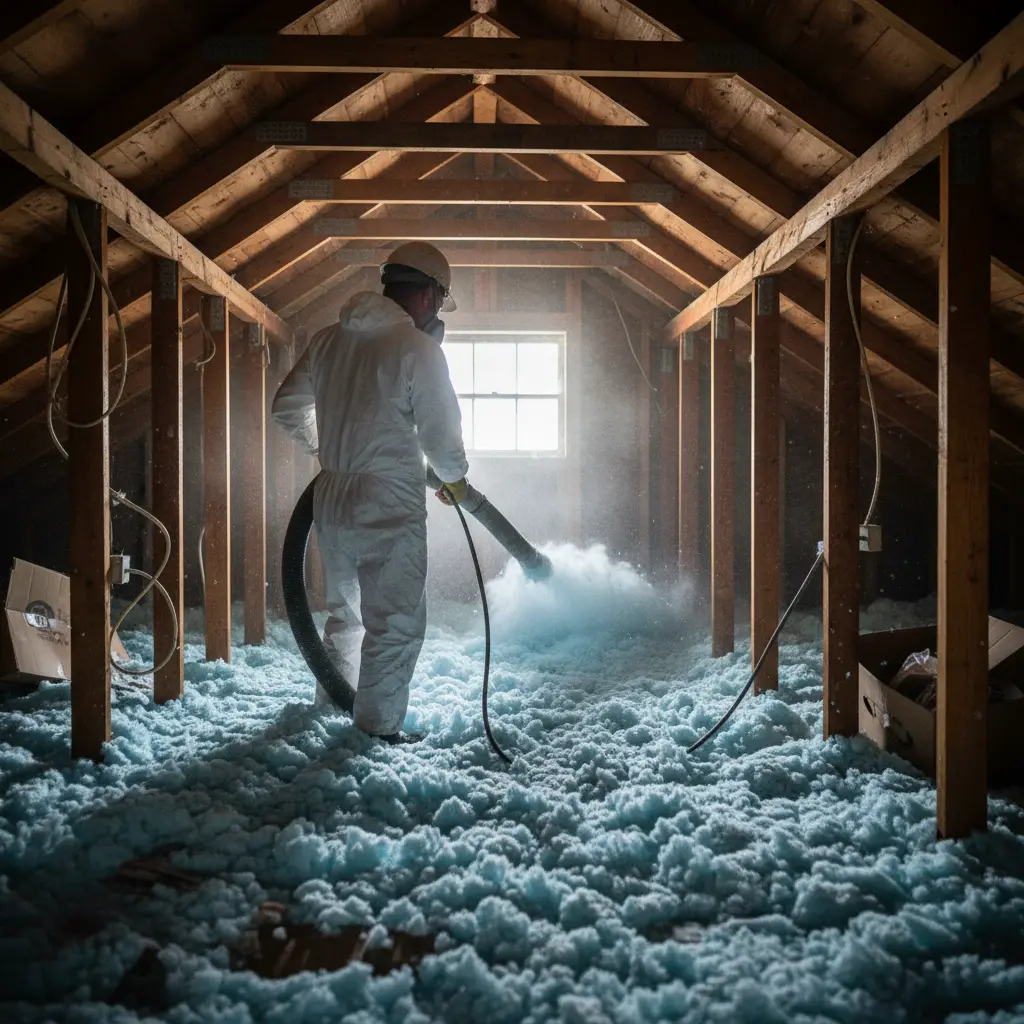
Our team in action — insulation professionals serving Los Angeles
Crawl Space Insulation Methods and Approaches
Fiberglass Batt Insulation
Fiberglass batts are the most common method for insulating between floor joists in a vented crawl space. Pre-cut to standard joist spacing (16 or 24 inches on center), batts are installed with the vapor facing upward toward the subfloor. In Los Angeles, R-19 (approximately 6.25 inches thick) is the code-minimum, though R-30 batts are recommended for homes in the hotter inland neighborhoods of the San Fernando Valley or areas with high summer solar gain. Explore our fiberglass insulation services for full details on this approach.
Spray Foam Insulation
Closed-cell spray polyurethane foam (ccSPF) is applied to the interior foundation walls and rim joists in an encapsulated crawl space system. With an R-value of approximately R-6.5 per inch, a 3-inch application achieves R-19 and also provides a complete air and moisture barrier. This method is ideal for Los Angeles hillside homes with irregular foundation geometries, older masonry foundations prone to moisture seepage, and any property where maximum air sealing is the priority. Learn more about our spray foam insulation services.
Blown-In Insulation
Blown-in cellulose or fiberglass can be applied in crawl space floor assemblies where joist access is limited or where filling irregular cavity depths is required. This method works well in Los Angeles bungalows with non-standard framing from the 1920s–1940s. See our blown-in insulation page for applications and R-value information.
Full Crawl Space Encapsulation
The most comprehensive solution, encapsulation combines a heavy-gauge vapor barrier on all floor and wall surfaces, spray foam on foundation walls, sealed vents, and optional dehumidification equipment. This approach is strongly recommended for Los Angeles homes in low-lying areas prone to seasonal water table rise, such as parts of the Wilmington, Boyle Heights, and Compton corridors.
Ready for Crawl Space Insulation? Get Your Free Estimate Today.
Air Tight Insulation serves Los Angeles and the surrounding area — we’ll be on-site within 24 hours.
📞 Call 323-618-6376Crawl Space Insulation Cost in Los Angeles
Understanding the cost of crawl space insulation in Los Angeles requires accounting for several project-specific variables. Below are current market ranges based on typical Los Angeles residential projects.
Typical Cost Ranges
- Fiberglass Batt Insulation (floor joists only): $1.50–$3.00 per square foot, or approximately $1,500–$4,500 for a 1,000–1,500 sq ft crawl space
- Spray Foam on Foundation Walls (encapsulation): $3.00–$6.00 per square foot of wall area, typically $2,000–$5,000 for an average Los Angeles home
- Full Encapsulation with Vapor Barrier: $5,000–$15,000 depending on crawl space size, access difficulty, and vapor barrier thickness
- Insulation Removal and Replacement: Add $1.00–$2.50 per square foot to any installation estimate
Los Angeles-Specific Cost Factors
Access Difficulty: Many older Los Angeles homes have crawl space access hatches smaller than 18×24 inches, requiring additional labor. Hillside homes in areas like Mount Washington or Montecito Heights often have split-level crawl spaces that add complexity.
Permit Requirements: Los Angeles City and County building departments may require permits for full encapsulation systems that alter crawl space ventilation. Permit fees typically range from $150–$500.
Utility Rebates: Southern California Gas Company (SoCalGas) and Southern California Edison (SCE) offer rebates of up to $0.10–$0.15 per square foot for qualifying insulation upgrades, which can reduce out-of-pocket costs by $150–$400 on average projects.
Call us at 323-618-6376 for a free, no-obligation estimate tailored to your specific property.
Crawl Space Insulation Services Across Los Angeles Neighborhoods
Silver Lake and Echo Park
These hillside neighborhoods feature a high concentration of 1920s–1940s Craftsman bungalows and Spanish Colonial homes on steep lots with irregular crawl space geometries. Shifting hillside soils and aging concrete foundations make moisture infiltration a persistent concern, and spray foam encapsulation is often the optimal solution here.
San Fernando Valley (Reseda, Northridge, Canoga Park)
Post-war tract homes built from the 1950s–1970s dominate this region. These homes frequently have standard vented crawl spaces with original or no insulation that is now 50–70 years old. Summer temperatures routinely exceeding 100°F make R-30 fiberglass or blown-in upgrades highly cost-effective in reducing cooling loads.
Eagle Rock and Highland Park
One of the most active housing renovation corridors in Los Angeles, this area features Craftsman and Victorian-era homes from the 1900s–1930s with raised foundations and minimal original insulation. Rodent activity is common, making combined rodent proofing and insulation packages particularly valuable here.
Culver City and Mar Vista
Coastal-adjacent neighborhoods heavily affected by the marine layer experience elevated year-round humidity at ground level. Vapor barrier quality is especially critical in these ZIP codes, and full encapsulation is frequently recommended.
Boyle Heights and East Los Angeles
Dense urban neighborhoods with clay-heavy soils and older housing stock. Many homes here have never had crawl space insulation professionally installed or inspected, making this area a priority for energy efficiency upgrades that can meaningfully reduce utility burdens for residents.
Crawl Space Insulation Maintenance Tips for Los Angeles Homeowners
- Inspect Annually in November: Before Los Angeles’s rainy season begins, visually inspect your crawl space for moisture accumulation, vapor barrier tears, and displaced insulation. Early detection prevents costly damage.
- Clear Foundation Vents of Debris: Los Angeles’s Santa Ana wind events (typically October–November and February–March) deposit leaves and organic material against foundation vents, restricting airflow in vented systems.
- Monitor for Rodent Activity: Check access hatch perimeters and vent screens quarterly for signs of gnawing or breaching, especially following dry summer months when urban wildlife seeks water sources near structures.
- Check Vapor Barrier Integrity After Wet Season: Heavy rainfall events can shift barrier panels. Inspect seam tape and wall attachments in March or April after the rainy season concludes.
- Ensure Proper Drainage Grading: Confirm that soil grades around your foundation slope away from the structure at a minimum of 6 inches per 10 feet to prevent water pooling against foundation walls.
- Recheck R-Values After Any Plumbing Work: Plumbers accessing the crawl space frequently displace or damage insulation batts. Always verify insulation integrity after any sub-floor plumbing repairs.
- Replace Dehumidifier Filters If Installed: Crawl space dehumidifiers common in encapsulated systems should have filters cleaned every 3–6 months in dusty Los Angeles conditions.
Why Choose Air Tight Insulation for Crawl Space Insulation in Los Angeles
At Air Tight Insulation, we are a professional insulation contractor with deep roots in the Los Angeles community. We understand the unique combination of climate conditions, soil types, housing stock ages, and building code requirements that make crawl space insulation in this region a specialized discipline — not a generic service.
Our team is trained in the full spectrum of crawl space insulation methods, from basic fiberglass batt installation to full encapsulation systems with spray foam and vapor barriers. We serve homeowners across all Los Angeles neighborhoods, from the beach communities of the Westside to the inland valleys of the San Fernando region.
We provide transparent, itemized estimates so you know exactly what you are paying for. We work with Southern California Edison and SoCalGas rebate programs to help offset your project costs wherever applicable. And we stand behind the quality of our work with every installation we complete.
Whether you are upgrading an original 1940s bungalow in Atwater Village or improving a recently purchased mid-century home in Tarzana, we bring the same level of professionalism and attention to detail to every project. Call us today at 323-618-6376 to schedule your free crawl space assessment.
View all our crawl space insulation service options or contact us online to get started.
Frequently Asked Questions About Crawl Space Insulation in Los Angeles
How much does crawl space insulation cost in Los Angeles?
Crawl space insulation in Los Angeles typically costs between $1,500 and $15,000 depending on the size of the crawl space, the method selected, and whether insulation removal and vapor barrier work is included. A standard fiberglass batt installation in a 1,200 sq ft crawl space runs approximately $2,000–$3,500. Full encapsulation systems with spray foam and heavy-gauge vapor barriers range from $6,000–$12,000 for average Los Angeles homes. Southern California utility rebates from SCE and SoCalGas can reduce eligible project costs by $150–$400.
How long does crawl space insulation installation take in Los Angeles?
Most residential crawl space insulation projects in Los Angeles are completed in one to two days. Simple fiberglass batt installations in accessible crawl spaces can be completed in a single day. Full encapsulation projects that include insulation removal, cleaning, vapor barrier installation, and spray foam application typically take two full days. Homes in hillside neighborhoods like Mount Washington or Glassell Park with difficult access may require additional time.
Is crawl space insulation required by Los Angeles building codes?
Yes. California Title 24 Building Energy Efficiency Standards require that floor assemblies over crawl spaces in Los Angeles (Climate Zone 9) meet a minimum of R-19. Many older homes predate this requirement and are not in compliance. While existing homes are generally not forced to retrofit unless undergoing permitted renovations, bringing your crawl space up to current standards will significantly reduce energy costs and may be required if you pull permits for other home improvement work.
Should I choose a vented or encapsulated crawl space for my Los Angeles home?
The answer depends on your home’s location and construction. Homes in coastal-adjacent neighborhoods (Mar Vista, Culver City, Palms) with higher ambient humidity typically benefit most from full encapsulation, which eliminates external moisture sources entirely. Homes in drier inland locations like the eastern San Fernando Valley may be well-served by a properly installed vented system with quality fiberglass or spray foam insulation. Our assessment process evaluates your specific conditions before recommending an approach.
Does crawl space insulation help with rodent problems in Los Angeles?
Not on its own — but when combined with rodent proofing, new insulation is highly effective. Old, damaged fiberglass batts are one of the most common nesting materials for roof rats, the dominant rat species in Los Angeles. Our combined rodent proofing and insulation service removes contaminated material, seals all entry points with galvanized mesh and foam, and installs new insulation that does not provide nesting opportunities. Learn more about our rodent proofing services.
What R-value do I need for crawl space insulation in Los Angeles?
California Title 24 requires a minimum R-19 for floor assemblies in Los Angeles (Climate Zone 9). For maximum energy performance, particularly in homes in the hot San Fernando Valley where summer temperatures regularly exceed 100°F, we recommend upgrading to R-30. For encapsulated systems using spray foam on foundation walls, a minimum 3-inch closed-cell application (approximately R-19.5) is standard.
Can I use the SCE or SoCalGas rebate programs for crawl space insulation?
Yes. Southern California Edison and Southern California Gas Company both offer rebates for qualifying insulation upgrades under their Energy Upgrade California programs. Eligibility depends on the R-value improvement achieved, the home’s existing insulation levels, and the installation method. Our team can help you identify applicable rebates and provide the documentation required for your rebate application.
How do I know if my Los Angeles home’s crawl space insulation needs to be replaced?
Key indicators include a musty odor from floor vents, cold floors during winter months, visible mold or rodent damage when you look into the crawl space access hatch, and unexpectedly high gas or electric bills. Fiberglass batts that have fallen from the joists, become wet and compressed, or show signs of rodent nesting have lost most of their insulating value and should be replaced. Our free inspection will give you a definitive answer.
Get Your Free Crawl Space Insulation Estimate in Los Angeles Today
Don’t let an uninsulated or under-insulated crawl space drain your energy budget, compromise your indoor air quality, or leave your home’s structure vulnerable to Los Angeles’s unique moisture and pest challenges. Air Tight Insulation is ready to help you take control of your home’s comfort and efficiency with professional crawl space insulation solutions designed specifically for Los Angeles homes.
Call us now at 323-618-6376 to schedule your free, no-obligation crawl space assessment. Our team serves all Los Angeles neighborhoods and is ready to provide a detailed, transparent estimate the same day as your inspection.
Request a free quote online or explore all our crawl space services to learn more. We look forward to helping you create a more comfortable, energy-efficient home.